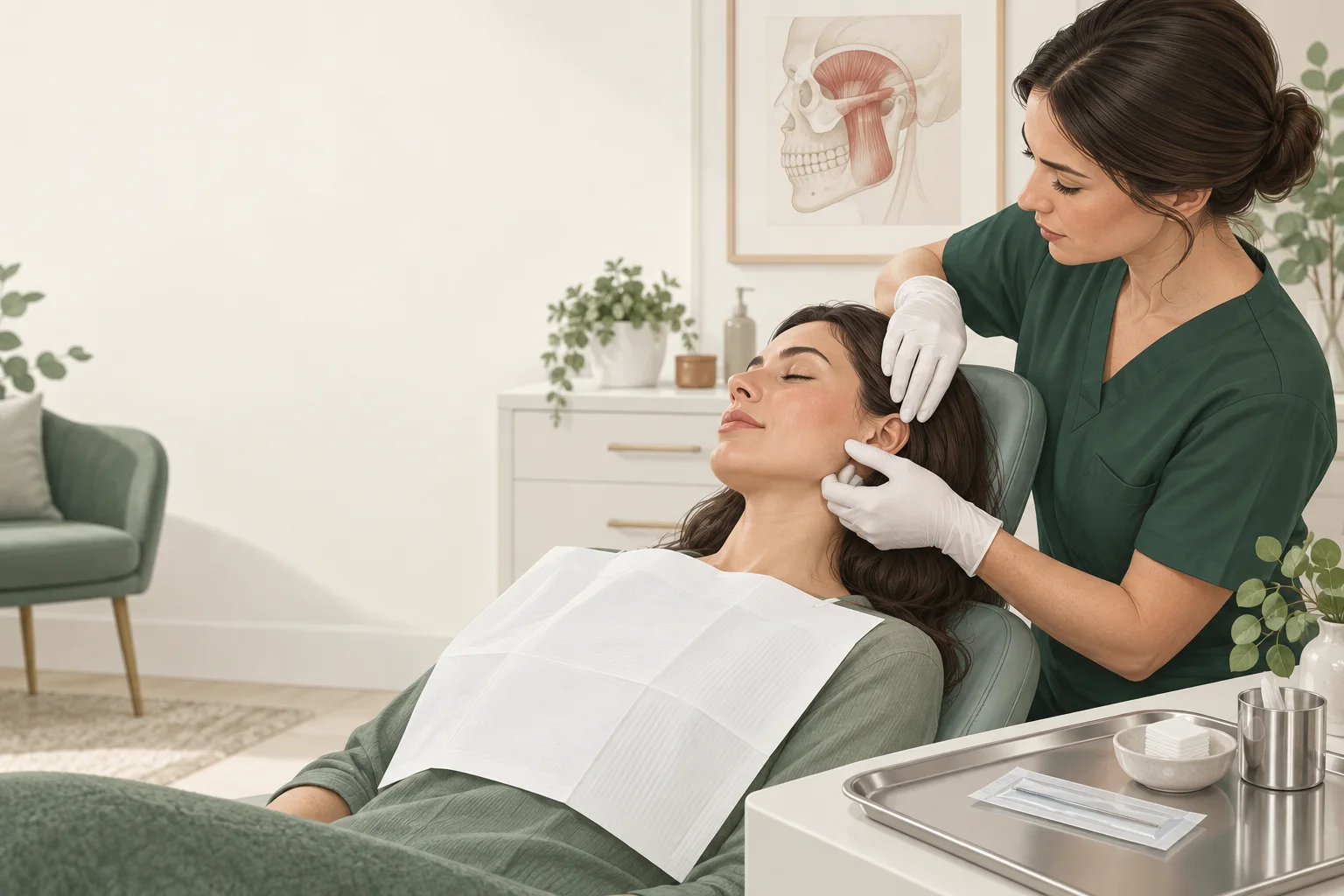
When jaw pain feels muscular—tight cheeks, tired chewing muscles, tenderness around the temples, or discomfort after clenching—dry needling may be one option within a broader TMD care plan. It is not a universal treatment, and it should begin with a careful diagnosis rather than a needle.
What is dry needling?
Dry needling uses a thin, solid filiform needle without injecting medication. A trained clinician uses examination findings and anatomy to decide whether a specific muscle or myofascial trigger point may be contributing to pain or restricted movement.
Dry needling and acupuncture may use similar needles, but the terms are not interchangeable. Dry needling is generally framed as a neuromusculoskeletal technique guided by anatomy and physical examination. Acupuncture may be practised through traditional East Asian medicine or Western medical frameworks. Training, professional scope and regulation vary by location.
Why chewing muscles matter in TMD
Temporomandibular disorders, or TMDs, are a group of conditions involving the jaw joints, chewing muscles and related function. Some people mainly have joint symptoms. Others have a stronger muscular component, with tenderness or trigger points in muscles such as the masseter at the side of the jaw or the temporalis at the temple.
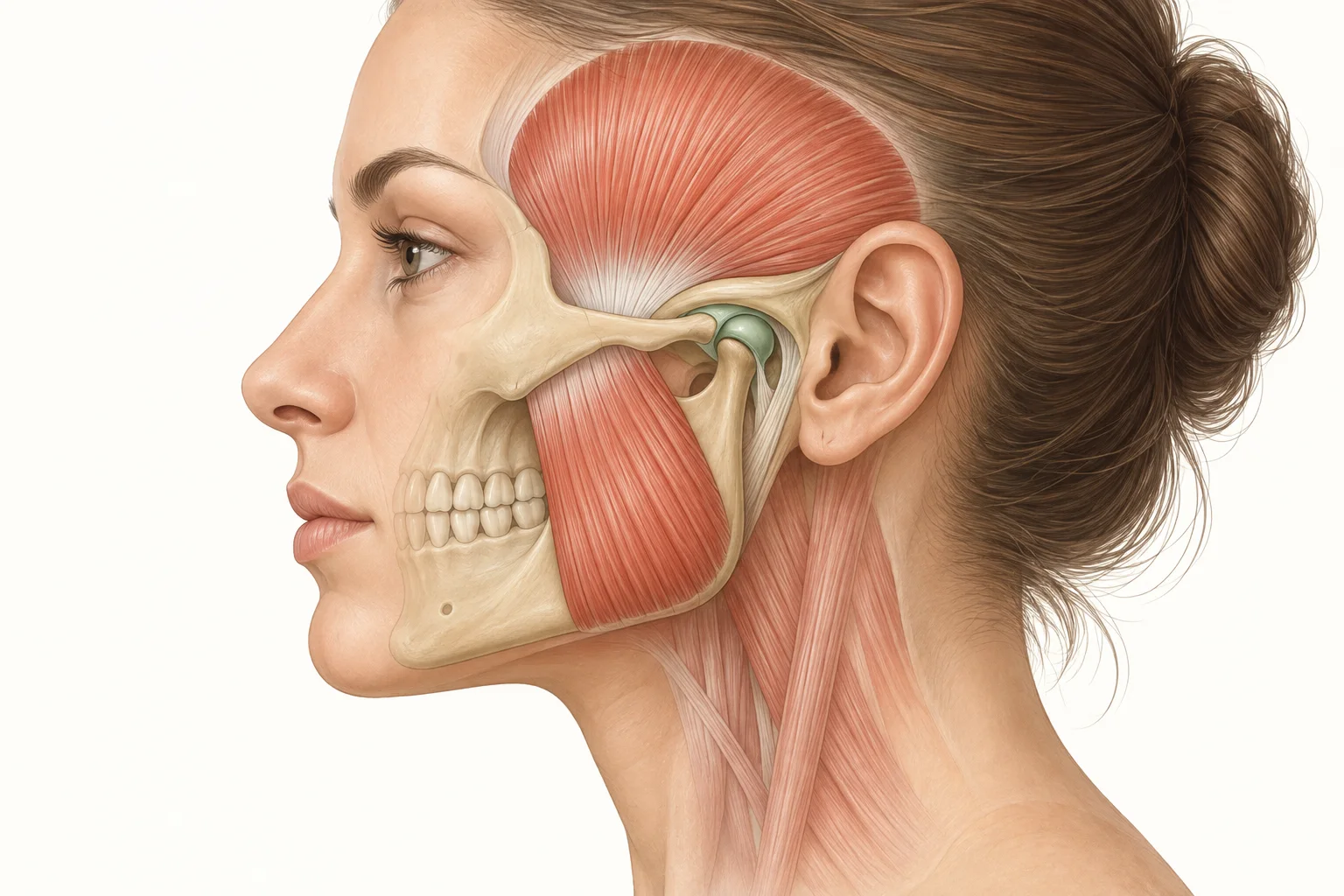
A tight or tender muscle does not automatically identify the cause of TMD. Tooth-related pain, inflammatory joint disease, nerve pain, headache disorders and other conditions can overlap with jaw symptoms. That is why dry needling should only be considered after appropriate screening.
Can dry needling “relax” the jaw muscles?
Patients often describe the goal as relaxing a tight muscle. Clinically, the effect is more nuanced. Needling may influence local sensitivity, a trigger-point response and the way the nervous system processes pain. Some people notice less tenderness or easier jaw movement for a period of time; others notice little change. It should not be presented as permanently resetting a muscle or correcting every cause of clenching.
What the research suggests
Clinical trials and reviews suggest that dry needling may reduce pain and improve mouth opening in some people with myofascial TMD, particularly over the short term. However, protocols vary considerably and the overall certainty of evidence remains limited. A 2023 randomized trial found that both dry needling and manual therapy improved pain and function, without a meaningful difference between them. A 2023 network meta-analysis likewise advised caution because of low-quality evidence and wide variation among studies.
What a careful appointment may look like

- Listen and screen. The clinician asks about pain, jaw locking, headaches, dental symptoms, medical history, medications, bleeding risk, previous needle reactions and your goals.
- Examine the whole picture. This may include jaw opening, joint sounds, muscle tenderness, tooth wear, bite relationships and neck or postural factors when relevant.
- Discuss options and consent. Dry needling is considered alongside alternatives. You should understand the reason for suggesting it, expected sensations, possible benefits, risks and the option to decline.
- Use a clean, anatomy-led technique. If you proceed, an appropriately trained and licensed clinician uses single-use sterile equipment and a technique suited to the assessed muscle. This article intentionally does not provide insertion locations or depths.
- Reassess and plan. Jaw movement, tenderness and symptoms are checked again. The next step may include observation, exercises, habit changes, an oral appliance, restorative planning or referral—not automatically another needling session.
Dry needling is usually an adjunct, not the whole plan
If muscle pain is only one part of the problem, treating the muscle alone may not be enough. A broader plan may address daytime clenching, sleep-related factors, workload and stress patterns, jaw exercises, an oral appliance, damaged or worn teeth, or coordination with a physiotherapist, pain clinician or medical provider.
Dry needling is less likely to be the central answer when symptoms are primarily driven by a joint disorder, acute dental disease, systemic inflammation, neuropathic pain or another condition requiring different care. The diagnosis matters more than the popularity of a technique.
Possible side effects and risks
Temporary soreness, discomfort during treatment, light bleeding and bruising are commonly reported. Some people may feel light-headed, tired, develop a headache or notice a short-term flare in symptoms. Serious complications are uncommon but can occur, including infection and injury to nearby nerves, blood vessels or other structures. Detailed anatomical knowledge, appropriate training, clean technique and patient-specific screening are therefore essential.
Questions worth asking before treatment
- What findings suggest that my pain is mainly muscular?
- What other diagnoses have been considered?
- What are the alternatives, including doing nothing for now?
- What training and authorization does the clinician have for this technique?
- How will we decide whether it has helped?
- What symptoms after treatment should prompt me to call the practice?
Clinical note: This article is general education, not a diagnosis or a recommendation for dry needling. Suitability depends on an individual examination, medical history, clinician training and local scope-of-practice rules.
Research referenced
- Dry Needling in Treatment of Temporomandibular Joint Disorders: A Systematic Review (2025)
- Deep dry needling versus manual therapy for myofascial TMD: systematic review and network meta-analysis (2023)
- Dry needling versus manual therapy in myofascial TMD: randomized controlled trial (2023)
- Frequency and severity of adverse events associated with dry needling: systematic review and meta-analysis (2026)